Sunday, August 14, 2022

Path Lit By Lightning – A biography of Jim Thorpe


By David Maraniss


A review of a review by Steven Halpern


This morning I read a review of David Maraniss’ new book that is a biography of Jim Thorpe. This was in the Book Review section of the New York Times. The book’s title comes from Jim Thorpe’s Native American name in the Sac and Fox language translated to, “Path Lit By Lightning.” I read Maraniss’ biography of Roberto Clemente and his book on the 1960 Olympic games in Rome, Italy. I found those books to be well worth reading. 


Then, Maraniss probably wasted his time writing biographies of Presidents William Jefferson Clinton and Barrack Obama. While I didn’t read those books, I’m sure that Maraniss failed to mention the essence of who Clinton and Obama are. Like President Donald Trump, they all defend a system where there are four individuals who have hundreds of billions of dollars, while 42 million people do not have enough food to eat. Had Maraniss portrayed the lives of Clinton and Obama in that perspective, he would never have found a publisher.


Apparently, the theme of his book on Thorpe is to take the reader on a journey down the road of the horrendous tragedy of Jim Thorpe. Then to argue that in spite of these obstacles, Thorpe might be the greatest athlete of all time. The obstacles Thorpe faced were a part of the long history of genocide against Native Americans. 


In my opinion, when we think about the life of Jim Thorpe, it is useful to look at his life in an historical perspective. Thorpe won several medals in the 1912 Olympic games. Maraniss argued that the justification for stripping Thorpe of those medals was always a sham. 


We might also think about the fact that in those same years Jack Johnson became the Heavyweight Boxing Champion of the World. The United States government organized a campaign to strip Johnson of his title because of a law, The Mann Act, that was rarely enforced. Johnson had a relationship with a prostitute who crossed state lines. At that time, politicians routinely engaged in sex with prostitutes, but for the government officials, that was irrelevant. Johnson effectively surrendered title and served one year in prison because of this clear frame-up.


Then, in 1968 Tommy Smith and John Carlos raised black-gloved fists while they were being awarded medals in the Mexico City Olympic Games. The Olympic games officials demanded that Smith and Carlos give up their medals. I listened to Carlos respond to that demand. He said that if the Olympic officials want his medal, they can come to Harlem and try to get it. They never did. 


Then there was Mohammed Ali who refused to serve in the military in the war against Vietnam. Ali argued that the Vietnamese “never called me n---er.” Ali would go on to become one of the most popular athletes of all time. 


Then there was the effective banning of Colin Kaepernick from professional football. This was because Kaepernick knelt during the playing of the national anthem. This was to protest the numerous murders of Black people in this country by the police. From what I can tell, it is still uncertain whether Kaepernick will be playing in the 2022-2023 season. 


My point in this post is to contrast the greatness of Jim Thorpe as an athlete, to the horror story that he experienced in much of his life. Then, I think it is also important to see how the struggles against discrimination have advanced over the years. 


However, we shouldn’t forget that today the professional basketball player Brittney Griner is living in a prison in Russia. The United States government is playing games trying to get the best deal it can in exchange for bringing Griner home. 


I have more information about the life of Jim Thorpe in my review of Kate Buford’s biography that can be seen at this link: Kate Buford - Jim Thorpe          


Native American Son – The life and sporting legend of Jim Thorpe


By Kate Buford


Knopf, 2010


 A review by Steven Halpern


Kate Buford wrote a compelling biography of one of the greatest athletes of all time.


Reading Kate Buford’s biography of Jim Thorpe made me realize that a thorough look at this great athlete’s life was long overdue.  Those who argue that Thorpe was the greatest athlete who ever lived have a persuasive argument.  


Thorpe was a dominant college and professional football player over a period of more than twenty years.  He won two gold medals in the 1912 Stockholm Olympics in two of the most grueling events.  While he never was an outstanding baseball player, he worked hard to develop his skills in the game and became a very good competitor.


Kate Buford started her book by giving a short outline of the history of Native Americans.  Jim Thorpe’s father was of the Sac and Fox nation and his mother was Potawatomi.  Thorpe was born towards the end of the more than 100 years of genocidal warfare carried out against Native Americans by the United States government.  These wars concluded with hundreds of treaties that the U.S. government had no intention of respecting.


Jim Thorpe was born in the state that today is known as Oklahoma.  Oklahoma used to be called the “Indian Territory” because many treaties declared that Native Americans would have the right to this land “forever.”  The land in Oklahoma would become some of the most lucrative in the nation because of the oil reserves discovered in the state.


While Jim Thorpe was supposed to own an allotment of land in Oklahoma, he needed to ask the government for any revenue from that land.  Even after Thorpe won two gold medals in the Olympics, the government determined that he was not competent to use the money generated from his land.


This was the atmosphere when Thorpe attended the Carlisle Indian Industrial School.  Sally Jenkins wrote an interesting book about the history of football at this school titled The Real All-Americans – The team that changed a game, a people, a nation.  The positive side to this book was how Jenkins gave the history of how football, as we know it, largely came from the Native American team at Carlisle.  


The problem with Jenkins’ book is how she portrayed Lt. Col. Richard Henry Pratt, who was the superintendant of the school.  Pratt demanded that the students at this school to never use their native language, to entirely forget their culture, and to immerse themselves in the culture that had committed numerous acts of genocide against their people.  Sally Jenkins argued that Pratt played a positive role in the education of the Native American Students.


To the contrary, Kate Buford gave many of the facts that showed how the education at Carlisle robbed the students of their heritage.  In fact, the norms of this school violated the student’s First Amendment rights to freedom of speech and freedom of religion.


In spite of this atmosphere, Jim Thorpe played on the Carlisle football team that dominated the colleges of that time.  Thorpe also saw his time at Carlisle as the best of his life largely because he was surrounded by Native Americans.


After the 1912 Olympics the International Olympic Committee stripped Thorpe of his medals.  Their argument was that he received a small amount of money for playing summer league baseball.  Buford pointed out that the IOC violated their own rules stating that any questions about an athlete’s eligibility would have to be made thirty days after the Olympics.  It took the IOC about six months before they raised this question.


Buford also gave the evidence that showed how the general public denounced the IOC’s decision.  In fact, Jim Thorpe was honored with huge parades in New York and Philadelphia when he returned from the Stockholm Olympics.


We might also consider that during these years the so-called “major league” baseball prohibited Black players from competing in their league.  In 1910 Jack Johnson became the first Black heavyweight boxing champion in the world.  The U.S. government conspired to convict Johnson of violating the Mann Act and he eventually served one year in prison.  In reality, Johnson’s real crime was that he was a Black man who was the heavyweight champion.


Once Jim Thorpe became a professional, he did the unheard of feat of competing in football and baseball for over twenty years.  We should consider that Thorpe played football during these years with a minimal amount of protective gear.


Clearly Thorpe did not receive the fantastic salaries that athletes receive today.  This meant that Thorpe needed to find work where he could in the midst of the depression.  He also endured the devastating loss of his first son.  These were some of the factors that led Thorpe to become dependent of alcohol.


This is one of the areas where Kate Buford’s book might have been improved.  She might have given a more realistic context to her book.  Clearly Jim Thorpe wasn’t the only person who had problems finding work during the depression.  Clearly he wasn’t the only one who drank more than he should have.  


However, Kate Buford gives us the evidence that shows how Jim Thorpe never gave up.  When he had to, he worked in a paint gang, or dug ditches, or worked as a security guard, or as an extra in Hollywood movies.  My opinion is that in Thorpe’s later life his challenges were greater than when he won the Olympics.  However, these challenges were also faced by millions of workers all over the country.


We also see how Jim Thorpe was a tireless defender of Native American rights.  While the government has routinely trampled on the rights of Native Americans, this same government is setting records for deporting workers who were born in other countries.


Clearly, Jim Thorpe made many mistakes that he would have admitted to.  However, his story is of an athlete who never gave up in the face of a political economic system that has no respect for real achievement.        


Saturday, August 6, 2022

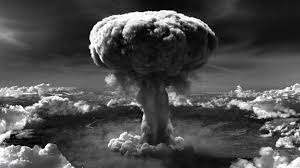
Hiroshima


We are all born into the world

and take our first breadth of air.

Then we discover that 

we need more things besides air.


We need food, clothing, a home, and health care.

Eventually we learn that the people who have power

are indifferent to all of that.

Their goal is to make outrageous amounts of money.


They tell us exactly what we need to do

for every minute we work for them.

But they aren’t satisfied with this.

They are determined to control the entire world.


So, the United States went to war 

against the people of the Philippines. 

Then they took control of Hawaii

for the Dole pineapple company. 


However, the affluent people in Japan

also wanted control over that area of the world.

They invaded China and murdered millions.

They took Malaya and Vietnam away from Britain and France.


Since the power brokers in this country also wanted that land,

they stopped U.S. oil shipments to Japan.
This was a clear act of war 

that the U.S. government would never have tolerated.


The Japanese responded to that act of war

by bombing the United States naval base in Hawaii. 

President Roosevelt declared how the day of this bombing

would live in infamy.  


Years later, a book was published titled “Years of infamy.”

This was the story of how 120,000 Japanese citizens 

of this country were forced to live

in concentration camps for years.


After the Japanese were effectively defeated,

General Curtis LeMay organized the 

fire-bombing campaign of Japan.

Large sections of 67 Japanese cities were burned to the ground. 


LeMay understood that Japanese 

civilian homes were made of wood.

He deliberately calculated the direction of the wind,

so the phosphorous fire-bombs would have their maximum effect.


Hundreds of thousands of Japanese men, women, and children 

died of smoke inhalation or were burned to death.

Now, the Japanese were certainly defeated,

but the U.S. Air Force wasn’t finished.


The United States government was in a hurry to end the war.

They didn’t want Russia to enter that war

because that would complicate their goal

of world domination.


They had just completed a meeting of 44 nations

in Bretton Woods, New Hampshire.

There the United States government informed those gathered

that they would be the new super-power of the world.


So, after fire-bombing 67 Japanese cities,

General LeMay ordered pilots of a B52 bomber

to murder the people of Hiroshima and Nagasaki

with atomic bombs.


A few years after Japan surrendered,

The U.S. Aire Force went on another bombing campaign 

against the people of Korea.

Then, the bombs rained down on the people of Vietnam.


General Curtis LeMay said that he wanted to

“Bomb Vietnam back into the stone age.”

But after years of horrendous war,

the Vietnamese people decisively defeated the invasion of their country.


Today the United States government invests about $800 billion on the military.

That money maintains about 3,000 atomic bombs.

When we look at what this government has done in the past,

I believe that we absolutely need to take the power out of their hands.

Friday, August 5, 2022

The Revolution Betrayed

By Leon Trotsky


Translated by Max Eastman


First published in 1937

Current publisher, Pathfinder Press


I first read Leon Trotsky’s The Revolution Betrayed about fifty years ago. At that time, I didn’t know much about politics, but was impressed by Trotsky’s argument. I’ve learned a few things in the past fifty years and the world has changed. Now I have a lot more appreciation for what Trotsky had to say. 


Trotsky and the Bolshevik Revolution


Leon Trotsky was born Leon Bronstein to a Jewish middle class farming family in the Ukraine. In 1905 he became President of the Soviet (worker’s council) during the revolution that erupted in that year. The Czarist government exiled Trotsky to Siberia, but he managed to escape to various European nations and ended up in New York City before the February 1917 Revolution. 


He then managed to return to Russia and joined the Bolsheviks under the leadership of Vladimir Ilyich Lenin. After the October Revolution the Bolshevik Party headed the Soviet government and organized the defense of an invasion by fourteen nations. Lenin asked Trotsky to head up the Red Army. Then, for two-and-one-half years, Trotsky organized the defense of the new government. This book is, for me, the best explanation of how and why a bureaucracy headed by Joseph Stalin managed to betray the essence of what the Russian Revolution was about.


Trotsky analyzed how and why the Bolsheviks came to power in his three-volume history of the Russian Revolution. The Czar ordered the armed forces to go to war against Germany but failed to supply the army with sufficient supplies of food, clothing, ammunition, or boots. Millions of Russian soldiers died in that war. In a nation that supplied food for an entire region, there was famine. 


In the February 1917 Revolution, the provisional government refused to end the war, or to provide food for the people. In fact, that government issued arrest warrants for Lenin and Trotsky because they favored an end to the war. The Bolsheviks responded to this situation by demanding “All power to the Soviets” and “Peace, Bread, and Land.” The Russian people became so disgusted by the provisional government that there was very little resistance to the October Revolution.  


The priorities of the Bolsheviks were completely different from the priorities of capitalist governments. In the United States, the government has made it clear, from its inception, that its priority is to support the interests of the most affluent people in the nation. The priority of the Bolsheviks was to support the interests of each and every worker and farmer in what became the Soviet Union. 


The new book 1619 documents the fact that institutionalized racist discrimination has been tolerated in this part of the world since before the revolution of the thirteen colonies. In Czarist Russia there was also institutionalized discrimination against many nationalities including Ukraine. The Bolsheviks had a policy of giving self-determination to all the oppressed nationalities in the former czarist Russia. The new nation became the Union of Soviet Socialist Republics. 


The new revolutionary government also favored the liberation of women. Their goal was to have communal kitchens and day care centers to ease the domestic work of women. The Soviet Union became the first nation in the world to give women the right to vote. Another goal was to teach everyone to read. The Bolsheviks created an atmosphere where all soldiers in the armed forces learned how to read. 


Trotsky wrote about Karl Marx’s vision for a future socialist world. Clearly looking into the future is difficult because there are countless variables that are impossible to anticipate. Saying that, Marx argued that he believed that the first socialist revolutions would erupt in the developed nations like Germany, Britain, or the United States. 


If revolutions erupted in those nations, socialist governments would immediately institute improved standards of living for workers and farmers. The capitalist norm of supporting the drive to maximize profits would be over. The new priority would be to organize the productive forces to benefit everyone. 


Today, in the United States this could mean giving everyone the absolute lifetime right to education, health care, housing, and food. This would be possible because providing for corporate profits, interest to banks, insurance, advertising, rents, and corporate law would no longer be necessary. While providing for human rights are fundamental to socialists, those same rights are unthinkable to capitalist politicians. 


Stalin’s betrayal of the Russian Revolution


The basic problem for the revolutionary government of the Soviet Union was that czarist Russia was not an advanced capitalist nation, but a relatively underdeveloped nation that was ruled by a feudal monarch. While there were highly developed factories, in many ways czarist Russia was not even capitalist. 


Because of the devastation of the First World War, the people experienced famine and the resources didn’t exist to make improvements in the overall standard of living. Emergency measures needed to be implemented just so people would have food.


The other problem was that the Bolsheviks expected for a revolution to erupt in Germany. That nation had also been devastated by the war and there were massive uprisings. However, the German authorities murdered the leaders of the working class and that revolution never materialized. So, the new revolutionary government of the Soviet Union needed to find a way to survive under some of the worst conditions. 


The former middle classes of Russia wanted an immediate relief from those conditions and could care less about the majority of the population. Trotsky gave the following explanation of why Joseph Stalin became the leader of the new bureaucracy. 


“He brought all the necessary guarantees: the prestige of an old Bolshevik, a strong character, narrow vision, and close bonds with the political machine as the sole source of his influence.”

“It was the friendly welcome of the new ruling group, trying to free itself from the old principles and from the control of the masses, and having need of a reliable arbiter in its inner affairs.” 


Here Trotsky makes it clear that the differences between him and Stalin weren’t primarily about ideas. The Bolsheviks wanted a government that would support the interests of everyone in the Soviet Union. The new bureaucracy, headed by Stalin, wanted a new elite that would have material advantages over most of the population. 


The Bolsheviks always understood that they were a part of an international struggle to liberate humanity from the dog-eat-dog world of capitalism. After the revolution the Bolsheviks needed to end the war and signed a peace agreement with Germany. That agreement gave Germany large sections of what used to be czarist Russia. 


Trotsky reported that the German government effectively lost control of those areas in less than a year because of the revolutionary uprisings within Germany. There were several other uprisings in Europe that stayed the hands of the imperialists in their attempt to overthrow the Soviet government. In Seattle, Washington the longshore workers refused to load ships headed to the counter-revolutionary forces attempting to overthrow the Soviet government.


This was just one example of how revolutions have always been supported by international events. The Chinese Revolution was supported by U.S. soldiers who refused be used to turn back that revolution after World War II. The Cuban Revolution was aided by the fact that the U.S. armed forces were tied up in Vietnam. The Vietnamese Revolution was aided by the international anti-war movement. While these are clear examples of how revolutions are related to international struggles, Stalin argued for a strategy of “Socialism in One Country.”


That strategy would prove be disastrous for workers all over the world. After Adolf Hitler came to power in Germany, he murdered thousands of communists. After that horror, Stalin signed a non-aggression pact with the Nazis. This enabled the German fascists to advance their war against France and Britain free of any opposition from the Soviet Union. 


Then Stalin ordered the armed forces of the Soviet Union to invade Finland in a winter when temperatures reached 40 degrees below zero. The Soviet defeat in Finland emboldened Hitler to invade the Soviet Union. Initially Stalin was surprised by that invasion because he had the stupid idea that Hitler would honor the so-called non-aggression pact. About 27 million people from the Soviet Union died, in part, because of this horrendous mistake of Stalin.


The Chinese Communist Party was first organized in opposition to the Kuomintang that supported the capitalist interests in China. Stalin used his financial support to demand that the CCP follow the orders of the Kuomintang.  Chiang Kai-shek then ordered his forces to murder thousands of members of the CCP in 1927. When asked if he supported the international revolution, Stalin’s answer was “nonsense.”  


Trotsky was aware of real advances the Soviet Union made after the revolution. He gave evidence of the unparalleled growth of the Soviet industrial economy. While China’s recent industrial growth was largely financed by capitalist interests, the industrial growth of the Soviet Union took place in isolation from capitalist finance.


However, that growth was compromised by the mis-leadership of Stalin. Instead of motivating workers based on solidarity, a new piecework system became the norm. Salaries ranged widely where some productive workers received about twenty times more in salary than the norm. Communist Party supervisors also received huge salaries relative to the norm. 


Under those conditions labor productivity lagged the productivity in capitalist nations. The quality of commodities was poor compared to the quality of commodities in the capitalist nations.


With respect to agriculture, Stalin’s policies were even more disastrous. The kulak was a middle-class peasant who hired laborers. After the revolution, the kulaks worked to consolidate their position and compromise any effort to improve agriculture. A rational way to deal with this problem was to introduce machinery and gradually demonstrate to the kulaks that socialist agriculture would be more productive.


Stalin’s policy dictated that the land of most kulaks would be confiscated and turned into collective farms. Those collective farms would be run by a bureaucracy whose primary interest was to maintain itself. 


The kulaks were appalled at the fact that they were losing everything they had. They murdered their cattle and Russia experienced years of famine. Just as with the workers in factories, farm laborers had little or no incentive to become more productive.


There are supporters of capitalism who argue that the government of Stalin was essentially the same as the Nazi government of Adolf Hitler. Trotsky put this point of view in perspective.


Hitler and Stalin were similar in that both regimes were intolerant to any and all opposition. Thousands of supporters of Trotsky were exiled to Siberia where they were coerced to confess to alleged crimes, and then oftentimes murdered. The intolerance of Hitler is well known.


However, Hitler and Stalin differ in their base of support. Hitler could not have become Chancellor of Germany without massive support from capitalist interests. Hitler remained loyal to those interests. 


The government of the Soviet Union came to power because of a working-class revolution. Stalin betrayed that revolution, but never had the support of capitalist financial interests. However, Stalin’s policies ultimately benefitted capitalism inside and outside of the Soviet Union.


Trotsky argued that capitalism could be reintroduced into the Soviet Union if the policies of Stalin were not reversed. Today Vladimir Putin heads a capitalist government in a nation that used to be called the Soviet Union. Just as Stalin went to war to grab land in Finland, Putin is at war to grab the land in Ukraine. 


While the Soviet Union was ruled by Stalin, the economy was, for the most part, self-sustaining. With the collapse of the Soviet Union, the idea of creating a genuine workers democracy was never a consideration to those who had power. So, they appealed to capitalist financial interests.


The interests of capitalists and workers continue to be antagonistic


Those financiers understood that the former soviet economy couldn’t compete effectively in the capitalist market. The Russian car called the Lada wasn’t going to compete with BNWs or Chevys. As a result, Russian industry was decimated and there was a significant deterioration in the standard of living.


Today, most people are unaware of what the Bolsheviks were attempting to do in the Russian Revolution. Living in the United States it is difficult to even imagine what a worker’s government would look like. 


Employers argue that workers are members of their “team.” Advertisers argue that “the customer is always right.” In this environment it isn’t easy to see that capitalists have interests that are antagonistic to workers on literally every issue. When capitalists get more in profits, this means that workers effectively get less. When workers so-called benefits are compromised capitalists profit. Today, we see prices skyrocketing. This means that capitalists profit, while workers see our real wages being effectively cut. 


In Trotsky’s preface to his History of the Russian Revolution he argued: “For decades the oppositional criticism is nothing more than a safety valve for mass dissatisfaction, a condition of the stability of the social structure.”


“The masses go into a revolution not with a prepared plan of social reconstruction, but with a sharp feeling that they cannot endure the old regime.”                    


Those words explained why revolutions erupted in Russia, China, Vietnam, and Cuba. When we look at the capitalist economy of the world today, it appears that we are entering a period where masses will no longer be able to “endure the old regime.”


When we look at the reality in the world today, we see that masses of young people are beginning to see that the capitalist system isn’t offering them much of a future. I’ve taken part in protests about Black Lives Matter, in support of abortion rights, protesting the destruction of the environment, an in solidarity with the people of Palestine, and Puerto Rico. Young people are also beginning to appreciate the socialist government of Cuba. These struggles, as well as the reality we face is creating an atmosphere where we will no longer be able to “endure the old regime.”

Sunday, July 10, 2022

What Is Our Real Potential?


By Steve Halpern


Are we destined to attend

schools that we yearn to escape from?

Is it inevitable that we must

hold down jobs that we hate?


Is it necessary for us to tell children

to go through this same cycle over and over again?

Or, 

Is there a better way?


Why not teach young people that history

consists of people who struggled to make this a better world?

Why not teach young people

that we can do the same?


We can build a descent place for everyone to live.

with botanical gardens, aviaries, theaters, museums

and places where we can all relax in comfort.

And there are millions who want to do the job.


We can make sure everyone has an excellent diet

because there is enough land to feed the world,

so that no one will live in hunger.

And there are millions who want to do the job.


We can produce commodities in harmony 

with the plants, animals, and minerals of this planet

so natural resources will be here for future generations.

And there are millions who want to do the job.


We can provide an education for all

where children learn how to think for themselves,

and to provide for the needs of everyone.

And there are millions who want to do the job.


We can guarantee that human beings

have the right to top quality health care,

where health is a fundamental priority.

And there are millions who want to do the job.


We can begin to communicate

with working people throughout the world

to gain the perspective of who we are and where we need to go.

And there are millions who want to do the job.


We can create jobs for all

where we elect our leaders

and the work begins to fulfill our potential

And there are millions who want to do these jobs.


But to the millions who want to do these jobs,

today we can only work to insure that the wealthy live in opulence.

Today, they are the ones who have power

and to realize our potential, we must take power. 


They say that this isn’t realistic.

They say that this will never happen.

But we are human beings who can improve our lives,

and we also can develop the will to do the job.


Saturday, July 9, 2022

Kabei: Our Mother – Film Review


Directed by Yoji Yamada, 2008 

The story of a Japanese family that endured persecution because of the father’s opposition to the second world war.


There have been many books and films about the second world war.  Few of these works available in the United States have looked at the everyday lives of Japanese civilians during the war.  Yoji Yamada’s film, Kabei: Our Mother not only looks at civilian life at this time, but gives us a picture of a Japanese family that endured persecution because of their opposition to the war.


This film is based on Teruyo Nogami’s autobiography and she is one of the two daughters portrayed in the film.  Shigeru Nogami, portrayed by Mitsugoro Bando is the father and former college professor who looses his job and then is arrested for his opposition to the Japanese war drive.   Kayo, portrayed by Sayuri Yoshinaga is the main character and the mother who diligently works to hold her family together after her husband is arrested.


During the film we see how the only crime of Shigeru was the fact that he opposed the war.  A police officer said openly that had Shigeru merely renounced his views he would be released from prison.  Yet Shigeru, as well as many other Japanese civilians, chose to remain in prison rather than support an unjust war.


This film also showed how Shigeru’s wife Kayo was ostracized by members of her family and community because of the fact that she shared her husband’s views against the war.  Kayo endured this ostracism while she held down a job and supported her children on a meager income.


In the United States, there are many people who continue to argue that this country needed to go to war against Japan.  The repression we see in the film Kabei was only one aspect of the repression of those days.  After all, the Japanese military forces murdered tens of millions of people in their occupations of China, Korea, Vietnam, and the Philippines.  On the other hand, the United States is portrayed as a nation with “liberty and justice for all.”


Therefore, it might come as a surprise that people were sent to prison in the United States of America for merely opposing the first and second world wars.  


Eugene V. Debs spent three years in prison for giving a speech in Canton, Ohio against US participation in the first world war.  Debs was a labor leader and ran for President of the United States five times.  The last time he ran for president was while he was in prison on charges of opposing the first world war.


Eighteen members of the Socialist Workers Party spent between 12 and 18 months in prison for their opposition to the second world war.  Among those sentenced were leaders of the Teamsters Union in Minneapolis Minnesota.  This teamsters local won union recognition after a bitter yearlong strike.  The strike happened to be one of the battles that transformed the labor movement in the United States.


We can also point to the facts that the United States government also committed war crimes aimed at civilians during the second world war.  One of the relatives in the film Kabei lived in the city of Hiroshima.  This relative died as a result of the US atomic bombing of that city.  Before the atomic bombing of Hiroshima and Nagasaki the United States destroyed large parts of the 67 largest cities in Japan with firebombing. 


Most people have a sense of the horrors of war.  These wars are even more horrendous when they in no way benefit the masses of humanity.  These must be some of the reasons why conscious people from the United States and Japan chose to go to prison rather than support horrendous wars that would only lead to more wars.


Since the second world war we have seen demonstrations that supported labor rights, civil rights, immigrant workers, and in opposition to US engineered wars.  I believe we need to understand that these demonstrations were, in part made possible by people in Japan, the United States, and the rest of the world,  who chose to go to prison rather than support unjust wars. 


Today anyone who lives in the United States has a better chance of going to prison than citizens in any other nation in the world.  Since the second world war the US has carried out wars all over the world that cost the lives of millions.  


Understanding these facts we might ask the question of what was accomplished by the slaughter of the second world war?  In other words, the real heroes of World War II were not the generals who caused massive destruction, but those who served time in prison rather than support and unjust war.